
The Same Promise, Different Day
A reflection on silence, survival, burnout, and what happens when loyalty starts feeling more like fear.
The Same Promise, Different Day
Every meeting sounded the same.
Help is coming.
We’re hiring.
We’ve got applications stacked up.
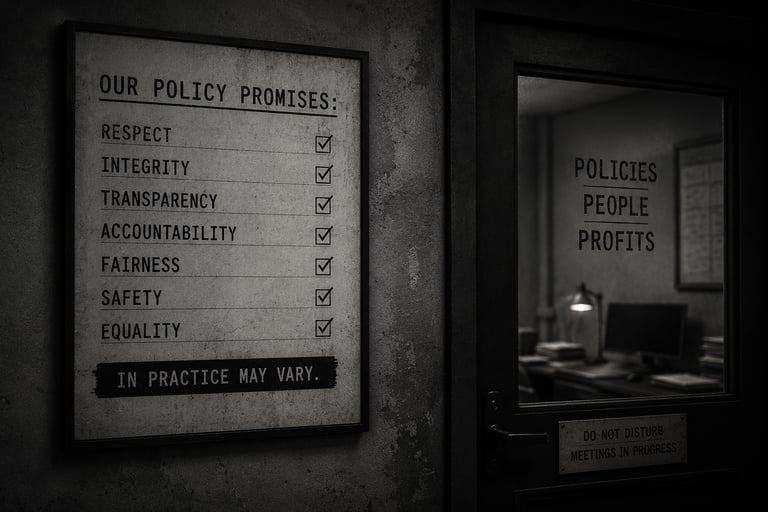
Different week. Different conversation. Same reality waiting for us when we walked back onto the floor. We were always short-staffed. And after a while, people stopped believing the promises anyway. Because even when someone new showed up, most of them didn’t stay long.
Some left before finishing their first full day.
Some lasted a few weeks before realizing the exhaustion wasn’t temporary, it was built into the culture.
And when management let someone go, the explanation was always simple:
“They just weren’t working out.”
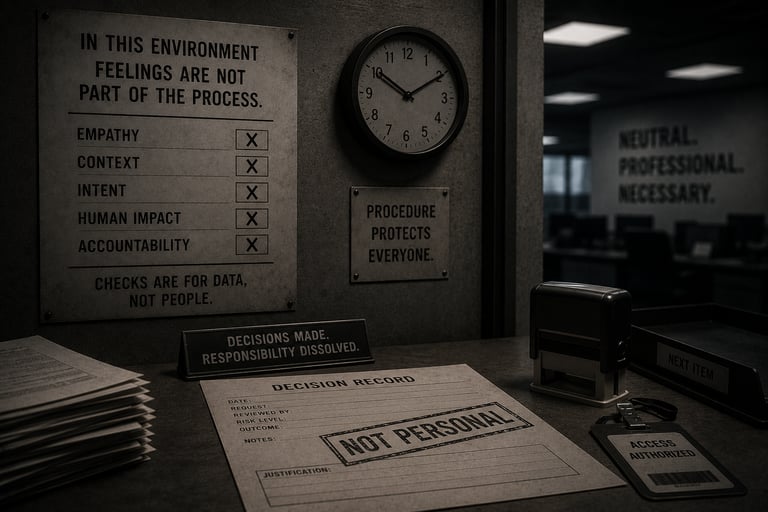
But no one ever asked if they were simply in the wrong place. No one tried to understand people.
Only production.
Only replacement.
Only output.
And little by little, that reality settled into all of us.
The Promise We Stopped Believing
We didn’t work endless overtime.
But we carried endless pressure.
The kind that doesn’t show up on a paycheck or a timesheet.
The tension.
The frustration.
The constant feeling that everyone was already stretched too thin.
You could see it in people’s faces.
The exhaustion that becomes so normal you stop mentioning it.
The quiet resentment that grows when nobody feels heard anymore.
The strange emotional numbness that develops when survival becomes routine.
People kept showing up anyway.
Because that’s what we did.
Becoming the Utility
It wasn’t until I became a utility that I really started seeing the full picture.
I moved between departments.
Between personalities.
Between frustrations.
I stopped seeing isolated problems and started seeing a pattern.
And for some reason, people opened up to me.
Maybe because I listened without pretending to have all the answers.
Maybe because they could tell I understood what it felt like to carry too much while pretending you were fine.
The more I listened, the heavier everything became.
Stories followed me home.
People trying their best and still feeling invisible.
Workers exhausted beyond words but afraid to speak honestly.
Good people slowly losing hope while management recycled the same promises over and over again.
And what hurt the most was realizing most of them no longer believed things would actually change.
They just needed someone willing to hear them.
Sometimes being listened to was the closest thing they had to relief.


The Weight People Carried Quietly
There is a specific kind of grief that develops inside environments where people stop feeling human.
Not dramatic grief.
Quiet grief.
The kind that hides inside forced smiles, sarcasm, exhaustion, and jokes made just to survive another shift.
People were carrying so much more than workload.
They carried anxiety.
Pressure.
Fear of speaking up.
Fear of being labeled difficult.
Fear of losing stability.
And underneath all of it was something even heavier:
the feeling that no matter how much they gave, it would never really matter.
That realization changes people slowly.
It teaches them to disconnect from themselves in order to survive.
When Loyalty Starts Feeling Like Fear
We were told to be proud.
To put the company first.
To be grateful.
To not stir the pot.
And for a long time, I believed that was loyalty.
But eventually I realized something uncomfortable:
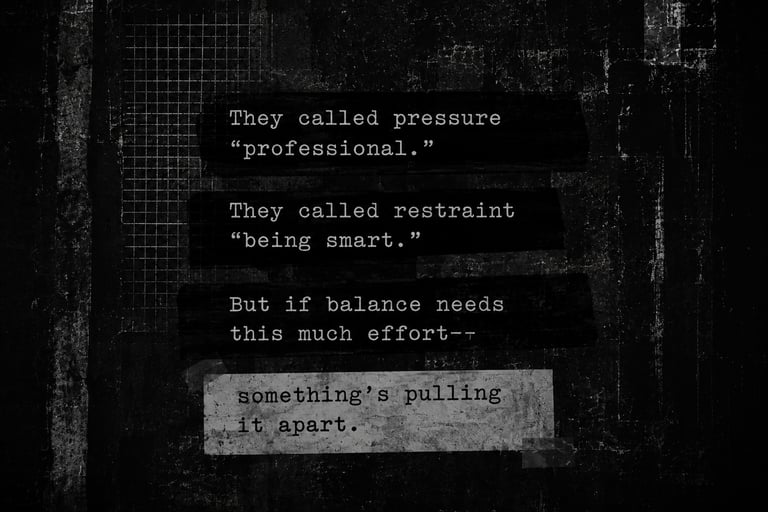
a culture built on silence is not loyalty.
It’s fear.
Fear of speaking honestly.
Fear of becoming “the problem.”
Fear of punishment disguised as accountability.
And I carried that fear too.
I stayed quiet longer than I should have because part of me still believed hard work and kindness would eventually protect me.
But silence never protected us.
It protected the system hurting people.
And once I realized that, I couldn’t unknow it.
The Moment the Illusion Broke
Somewhere between hearing everyone else’s stories and surviving my own, the illusion finally cracked.
I stopped believing the next hire would magically fix everything.
I stopped believing management truly cared about people the way they claimed to.
And I stopped believing the word “family.”
Because real families do not normalize burnout.
They do not ask people to sacrifice their mental health for production numbers.
They do not teach workers that survival should feel like gratitude.
That realization hurt deeply.
Because I had given nearly a decade of my life to that place.
I had poured pieces of myself into surviving it.
But strangely… the truth was also freeing.
Because once you finally see something clearly, pretending becomes impossible.


Finding My Voice Inside the Noise
Becoming a utility didn’t just give me perspective.
It gave me purpose.
For the first time, I started speaking up, not only for myself, but for the people beside me.
The exhausted ones.
The overlooked ones.
The people carrying more than anyone acknowledged.
I started realizing how much emotional labor existed inside those walls.
How many people were silently drowning while still showing up every morning.
And eventually I had to face a hard truth:
caring deeply inside a system that refuses to change can break you too.
Still, I spoke anyway.
Because someone had to.
Because silence had become the company’s first language — and I was exhausted from pretending to speak it fluently.


The Burnout That Came From Caring
People assume burnout only comes from working too hard.
But that wasn’t the deepest wound for me.
The deepest wound was caring in a place that stopped seeing people as human.
Watching good workers slowly lose themselves.
Watching problems repeat endlessly.
Watching fear become normalized.
Watching people convince themselves exhaustion was just adulthood.
That was the part that hollowed me out.
Not the labor itself.
The emotional weight of witnessing people survive environments that were slowly disconnecting them from themselves.
And somewhere inside all of that, my boundaries began forming.
Not loudly.
Not perfectly.
But steadily.
Because once I realized my voice mattered, I couldn’t go back to abandoning myself just to keep the peace.


Sometimes burnout doesn’t begin with overwork.
Sometimes it begins the moment you realize your humanity matters in a place that only measures productivity.
Maybe these questions are a place to begin:
Have I mistaken silence for loyalty?
What emotional weight am I carrying that no one else sees?
What parts of myself have I disconnected from in order to survive?
You are allowed to question environments that require self-abandonment to function.
And you are allowed to leave them.

Some environments teach you to disconnect from yourself in order to survive them.
Healing begins the moment you stop calling that strength.
— Bethany Grace
The Same Promise, Different Day
Every meeting sounded the same.
Help is coming.
We’re hiring.
We’ve got applications stacked up.
Different week.
Different conversation.
Same reality waiting for us when we walked back onto the floor.
We were always short-staffed.
And after a while, people stopped believing the promises anyway.
Because even when someone new showed up, most of them didn’t stay long.
Some left before finishing their first full day.
Some lasted a few weeks before realizing the exhaustion wasn’t temporary — it was built into the culture.
And when management let someone go, the explanation was always simple:
“They just weren’t working out.”
But no one ever asked if they were simply in the wrong place.
No one tried to understand people.
Only production.
Only replacement.
Only output.
And little by little, that reality settled into all of us.
The Promise We Stopped Believing
We didn’t work endless overtime.
But we carried endless pressure.
The kind that doesn’t show up on a paycheck or a timesheet.
The tension.
The frustration.
The constant feeling that everyone was already stretched too thin.
You could see it in people’s faces.
The exhaustion that becomes so normal you stop mentioning it.
The quiet resentment that grows when nobody feels heard anymore.
The strange emotional numbness that develops when survival becomes routine.
People kept showing up anyway.
Because that’s what we did.
Becoming the Utility
It wasn’t until I became a utility that I really started seeing the full picture.
I moved between departments.
Between personalities.
Between frustrations.
I stopped seeing isolated problems and started seeing a pattern.
And for some reason, people opened up to me.
Maybe because I listened without pretending to have all the answers.
Maybe because they could tell I understood what it felt like to carry too much while pretending you were fine.
The more I listened, the heavier everything became.
Stories followed me home.
People trying their best and still feeling invisible.
Workers exhausted beyond words but afraid to speak honestly.
Good people slowly losing hope while management recycled the same promises over and over again.
And what hurt the most was realizing most of them no longer believed things would actually change.
They just needed someone willing to hear them.
Sometimes being listened to was the closest thing they had to relief.
The Weight People Carried Quietly
There is a specific kind of grief that develops inside environments where people stop feeling human.
Not dramatic grief.
Quiet grief.
The kind that hides inside forced smiles, sarcasm, exhaustion, and jokes made just to survive another shift.
People were carrying so much more than workload.
They carried anxiety.
Pressure.
Fear of speaking up.
Fear of being labeled difficult.
Fear of losing stability.
And underneath all of it was something even heavier:
the feeling that no matter how much they gave, it would never really matter.
That realization changes people slowly.
It teaches them to disconnect from themselves in order to survive.
When Loyalty Starts Feeling Like Fear
We were told to be proud.
To put the company first.
To be grateful.
To not stir the pot.
And for a long time, I believed that was loyalty.
But eventually I realized something uncomfortable:
a culture built on silence is not loyalty.
It’s fear.
Fear of speaking honestly.
Fear of becoming “the problem.”
Fear of punishment disguised as accountability.
And I carried that fear too.
I stayed quiet longer than I should have because part of me still believed hard work and kindness would eventually protect me.
But silence never protected us.
It protected the system hurting people.
And once I realized that, I couldn’t unknow it.
The Moment the Illusion Broke
Somewhere between hearing everyone else’s stories and surviving my own, the illusion finally cracked.
I stopped believing the next hire would magically fix everything.
I stopped believing management truly cared about people the way they claimed to.
And I stopped believing the word “family.”
Because real families do not normalize burnout.
They do not ask people to sacrifice their mental health for production numbers.
They do not teach workers that survival should feel like gratitude.
That realization hurt deeply.
Because I had given nearly a decade of my life to that place.
I had poured pieces of myself into surviving it.
But strangely… the truth was also freeing.
Because once you finally see something clearly, pretending becomes impossible.
Finding My Voice Inside the Noise
Becoming a utility didn’t just give me perspective.
It gave me purpose.
For the first time, I started speaking up — not only for myself, but for the people beside me.
The exhausted ones.
The overlooked ones.
The people carrying more than anyone acknowledged.
I started realizing how much emotional labor existed inside those walls.
How many people were silently drowning while still showing up every morning.
And eventually I had to face a hard truth:
caring deeply inside a system that refuses to change can break you too.
Still, I spoke anyway.
Because someone had to.
Because silence had become the company’s first language — and I was exhausted from pretending to speak it fluently.
The Burnout That Came From Caring
People assume burnout only comes from working too hard.
But that wasn’t the deepest wound for me.
The deepest wound was caring in a place that stopped seeing people as human.
Watching good workers slowly lose themselves.
Watching problems repeat endlessly.
Watching fear become normalized.
Watching people convince themselves exhaustion was just adulthood.
That was the part that hollowed me out.
Not the labor itself.
The emotional weight of witnessing people survive environments that were slowly disconnecting them from themselves.
And somewhere inside all of that, my boundaries began forming.
Not loudly.
Not perfectly.
But steadily.
Because once I realized my voice mattered, I couldn’t go back to abandoning myself just to keep the peace.
Reflection
Sometimes burnout doesn’t begin with overwork.
Sometimes it begins the moment you realize your humanity matters in a place that only measures productivity.
Maybe these questions are a place to begin:
Have I mistaken silence for loyalty?
What emotional weight am I carrying that no one else sees?
What parts of myself have I disconnected from in order to survive?
You are allowed to question environments that require self-abandonment to function.
And you are allowed to leave them.
A Quiet Note
Some environments teach you to disconnect from yourself in order to survive them.
Healing begins the moment you stop calling that strength.
— Bethany Grace
Pull Quote Suggestions ✨
After “The Promise We Stopped Believing”
“The hardest part wasn’t being short-staffed. It was realizing no one expected things to truly change anymore.”
After “Becoming the Utility”
“I stopped seeing departments. I started seeing exhausted people trying to survive inside the same machine.”
After “When Loyalty Starts Feeling Like Fear”
“Silence wasn’t protecting us. It was protecting the system that kept hurting people.”
After “The Moment the Illusion Broke”
“Real families don’t ask you to sacrifice your mental health to prove your loyalty.”
After “Finding My Voice Inside the Noise”
“The burnout didn’t come from working hard. It came from caring in a place that stopped seeing people as human.”
Final Pull Quote
“My boundaries were born the moment I realized silence was costing me my humanity.”
If this resonated with you, or reminds you of someone who may need it, pass it on.
Stay rooted.
Stay wild.
Stay true.
Stay rooted. Stay wild. Stay true.
boundariesandburnout365@gmail.com
Healing. Creativity. Reflection.
© 2025-Present Boundaries & Burnout — All Rights Reserved.